
The Syntax of Silence: Why Code Is Becoming Literature

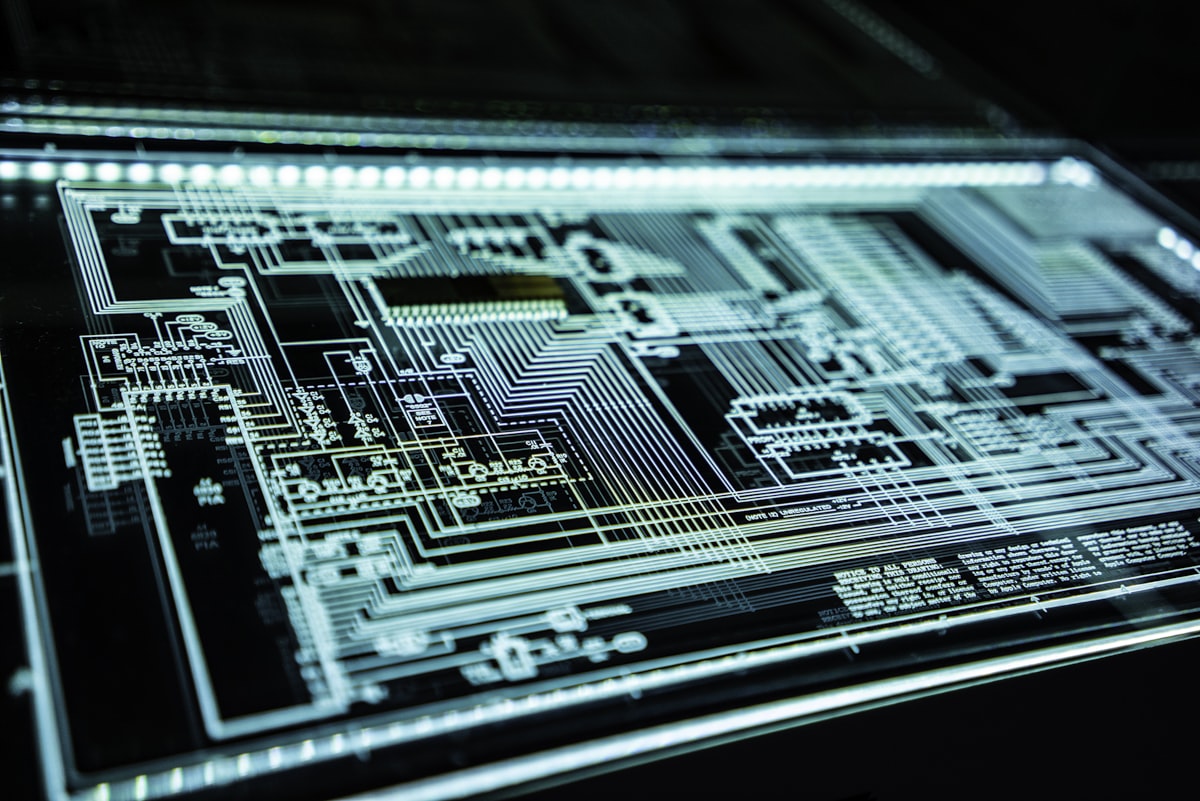
For the better part of the last half-century, the primary constraint on software creation was syntactic correctness. The compiler was a harsh god: a missing semicolon, a malformed bracket, or a type mismatch was heresy. We built our cathedrals of logic on the foundation of determinism. If input A is provided, output B must occur.
This era is ending.
We are witnessing the most significant inversion in the history of computer science. We are moving from a world where we explicitly command the machine how to do something, to a world where we describe what we want done. The friction has shifted from syntax to semantics.
The Death of Determinism
In the classical stack—the world of C++, Java, and early JavaScript—code was architectural. You laid bricks. You understood the load-bearing capacity of a specific library. You managed memory, or at least, you managed the garbage collector that managed the memory.
Today, with the rise of Large Language Models (LLMs) and probabilistic computing, the "brick" has been replaced by the "prompt."

This is not merely a change in tooling; it is a change in ontology. When you write a prompt for an AI to generate a React component, you are not writing code. You are engaging in a dialogue. The output is not deterministic; it is probabilistic. It might work perfectly, or it might hallucinate a dependency that doesn't exist.
The role of the developer, therefore, is no longer that of the author, but that of the senior editor.
English as the New Compiler
This shift creates a fascinating paradox for the industry. For years, we told English majors to "learn to code" if they wanted job security. We treated natural language as "soft" and programming languages as "hard."
But as AI handles the boilerplate—the useEffect hooks, the API routes, the CSS grids—the value of "hard" coding skills diminishes. The bottleneck is no longer knowing how to reverse a binary tree on a whiteboard. The bottleneck is articulation.
"The limit of your language is the limit of your world." — Ludwig Wittgenstein
In this new paradigm, the ability to analyze a text (or a codebase), identify thematic inconsistencies, and articulate a precise revision is more valuable than rote memorization of syntax. The best engineers of the next decade will likely share more DNA with literary critics than with mathematicians. They will need to understand context, nuance, and ambiguity—the very things compilers used to hate.
The Editorial Stance
This does not mean the end of engineering. It means the elevation of it.
We are moving up the abstraction ladder one final time. Just as we moved from punch cards to Assembly, and Assembly to C, we are now moving from High-Level Languages to Natural Language Intent.
The developer's job is to curate. To look at the "draft" produced by the AI, recognize where the logic is brittle, where the security is lax, and where the user experience is hollow. We are the custodians of quality in a world of infinite, cheap generation.
Silence is the new syntax. The code you don't write is the most important code of all.
Further Viewing
For a deeper technical understanding of this transition, Andrej Karpathy’s analysis of "Software 2.0" remains the definitive text on how we are moving from explicit code to optimization problems.
Discussion
Discussion (0)
Join the discussion