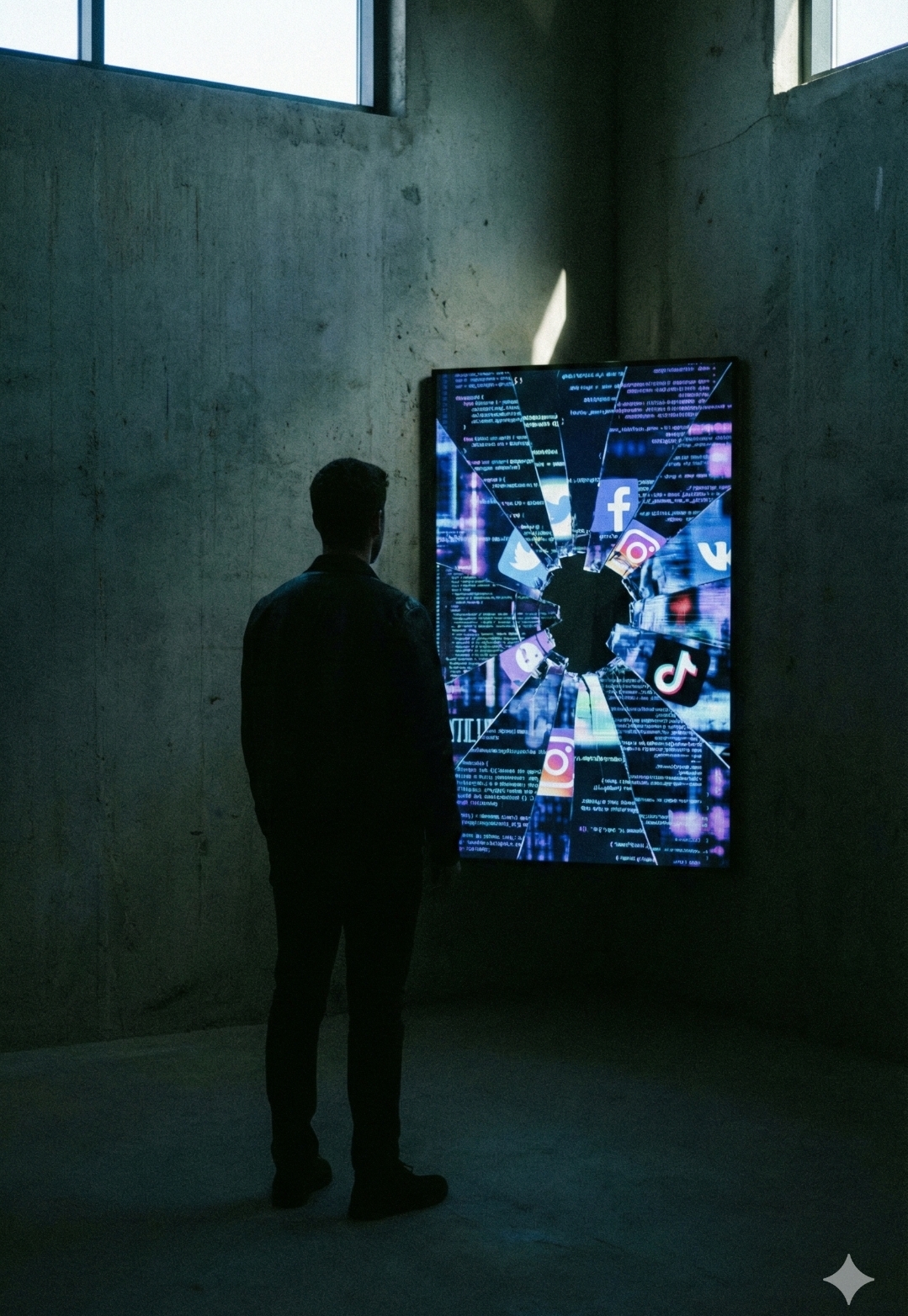
The Algorithmic Mirror: Are You Choosing, or Are You Being Served?

Open your Spotify "Daily Mix." Open your Netflix homepage. Open your TikTok feed.
What do you see? You see yourself.
You see the music you already like, the movies similar to ones you already watched, and the opinions you already agree with. We call this "personalization," and we treat it as a luxury. But it is actually a cage.
The Comfort Trap
As a developer, I know how these systems work. They are optimized for one metric: Engagement. The algorithm knows that if it challenges you—if it plays a song that is weird, or shows you a political view that makes you angry—you might close the app.
So, it feeds you comfort. It smoothes out the edges of the world until everything feels familiar.
The problem is that Growth happens in the unfamiliar. You find your new favorite band by accident. You change your worldview by stumbling into a debate you didn't ask for.
When we let algorithms curate our lives, we trade Discovery for Convenience.

The Echo Chamber
This isn't just about entertainment; it's about reality.
If Google only shows you search results that confirm your biases, you aren't learning—you're just nodding. We are slowly splitting into different realities, where we only ever encounter people who look, think, and vote exactly like us.
Technology was promised as a window to the world. Instead, it has become a mirror.
Watch: How We Need to Remake the Internet
Jaron Lanier is a philosopher of the digital age. In this talk, he argues that we need to redesign the internet to reward "human" behavior rather than "robotic" engagement.
Conclusion
Next time you go online, try to break the pattern.
Don't click the "Recommended" video. Search for something random. Listen to a genre you hate. Read an article from a website you disagree with.
Remind the algorithm that you are a human, not a data point.
Discussion
Discussion (0)
Join the discussion