
Entropy in the Wallet: Why Your Salary is a Depreciating Asset

There is a glitch in the operating system of the modern world. It is a feature, not a bug, designed by central banks, but for the end-user—you, it manifests as a critical system failure.
That glitch is Inflation.
But let us use a more precise term from physics: Entropy. Entropy is the inevitable decline of a system into disorder. In the financial realm, holding fiat currency (Naira, Dollars, Euros) is an act of exposure to entropy. Every second your capital sits in a bank account, it is being eroded by the silent, invisible tax of monetary expansion.
The Mathematics of Decay
The old playbook, written for our parents' generation, was simple: work hard, save money, retire. This playbook is now a compilation error.
If the global money supply expands by 15% annually (as it has in many developing and developed nations alike), and your savings account yields 5%, you are not "making money." You are losing purchasing power at a rate of 10% per year. You are running on a treadmill that is accelerating backward.
To understand the macro-mechanics of this decay, we must look at the historical cycles of empire and currency. This is not a new phenomenon; it is a recurring loop in the source code of civilization.
When you view the economic machine through this lens, you realize that "saving" in fiat currency is merely storing your life energy in a battery that leaks.
The Shift to Hard Assets
The solution is not to work harder. The solution is to change the vessel in which you store your value. You must move from Liquid (Cash) to Solid (Assets).
In software engineering, we talk about "immutable" data structures—data that cannot be changed after it is created. In finance, we need Immutable Assets.
- Equity: Ownership in businesses (or your own business). When a currency collapses, a business creates value that reprices in the new reality.
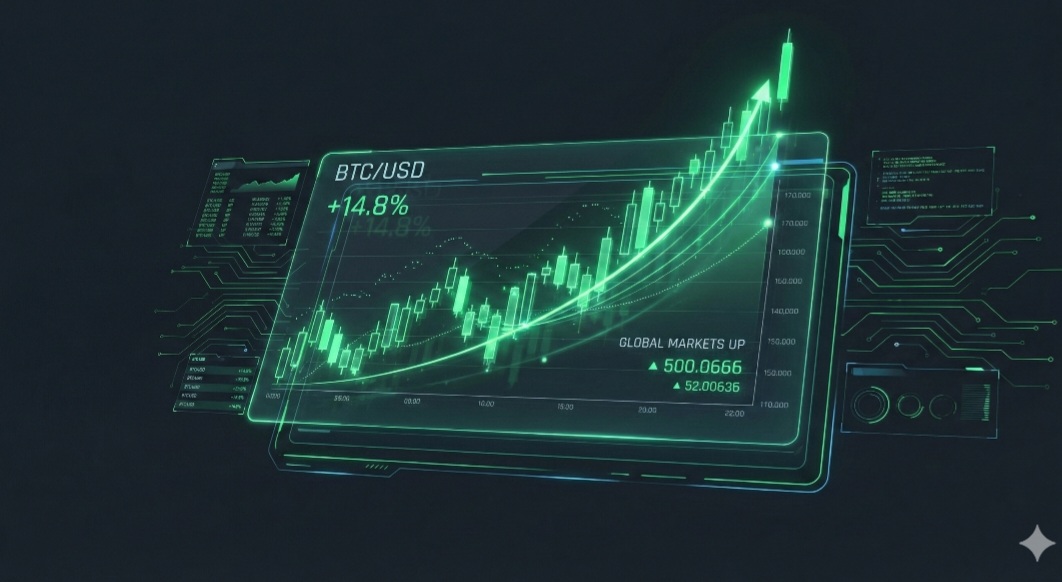
- Digital Hard Money: Assets like Bitcoin which have a hard cap on supply. They are mathematically immune to the "print" button of central banks.
- Skills (The Ultimate Asset): The ability to write code, to persuade, to build systems. This is the only asset that travels with you across borders and cannot be confiscated.
The Architect's Mindset
This is why I view finance not as "accounting," but as system architecture.
Your personal economy is a distributed system. You have inputs (salary), leaks (inflation/spending), and storage. If your storage layer is faulty (cash), the system will fail regardless of how high your inputs are.
The goal of the modern individual is to minimize exposure to the legacy financial system. Keep only enough cash for the "gas fees" of life—rent, food, transport. Everything else must be deployed into assets that have a chance of outrunning the printing press.
We are living through a changing world order. The rules of the 20th century do not apply to the 21st. Stop saving. Start building.
Discussion
Discussion (0)
Join the discussion